


Eye Movement Desensitization and Reprocessing (EMDR)

“The goal of EMDR Treatment is to rapidly metabolize the dysfunctional residue from the past and transform it into something useful.” 

Francine ShapiroFounder of EMDR Therapy

When something disturbing happens, it gets stored in the brain in a way that our human system feels like that event is either going to happen again at any moment or is happening now. This is stored physically in the brain. When some event happens that may be similar or just has an element that reminds the system of that disturbing event, the brain reacts as if the original disturbing event is happening.

EMDR helps to move the storage of that memory to a more functional part of the brain that can experience the event as actually being in the past. It is important to know that there is a real physical change happening in the EMDR. The events that previously activated the brain into overreaction no longer have that effect. The person can now react to the present without the past interfering.

Eye Movement Desensitization and Reprocessing (EMDR) is an extensively researched, proven therapy designed to help people recover from trauma and PTSD.

How does EMDR work?

EMDR uses guided "bilateral stimulation"—such as side-to-side eye movements—to help the brain safely reprocess traumatic memories, reducing their emotional intensity and vividness.

What does EMDR treat?

Beyond trauma, research shows EMDR is highly effective for anxiety, depression, OCD, chronic pain, and addiction.

Trusted Worldwide

EMDR is recognized as an effective treatment by top global health organizations, including the World Health Organization (WHO), the American Psychological Association (APA), and the U.S. Department of Veterans Affairs.

Proven Results

To date, EMDR therapists have successfully helped millions of people across 130 countries.
— EMDR 101

Eye Movement Desensitization and Reprocessing (EMDR)​

EMDR is a structured therapy that encourages the patient to focus briefly on the trauma memory while simultaneously experiencing bilateral stimulation (typically eye movements), which is associated with a reduction in the vividness and emotion associated with the trauma memories. Eye Movement Desensitization and Reprocessing (EMDR) therapy is an extensively researched, effective psychotherapy method proven to help people recover from trauma and PTSD symptoms.

Who can benefit from EMDR therapy?

EMDR therapy helps children and adults of all ages. Therapists use EMDR therapy to address a wide range of challenges:

  • Anxiety, panic attacks, and phobias
  • Chronic Illness and medical issues
  • Depression and bipolar disorders
  • Dissociative disorders
  • Eating disorders
  • Grief and loss
  • Pain
  • Performance anxiety
  • Personality disorders
  • Post-Traumatic Stress Disorder (PTSD) and other trauma and stress-related issues
  • Sexual assault
  • Sleep disturbance
  • Substance abuse and addiction
  • Violence and abuse

What can I expect from EMDR?

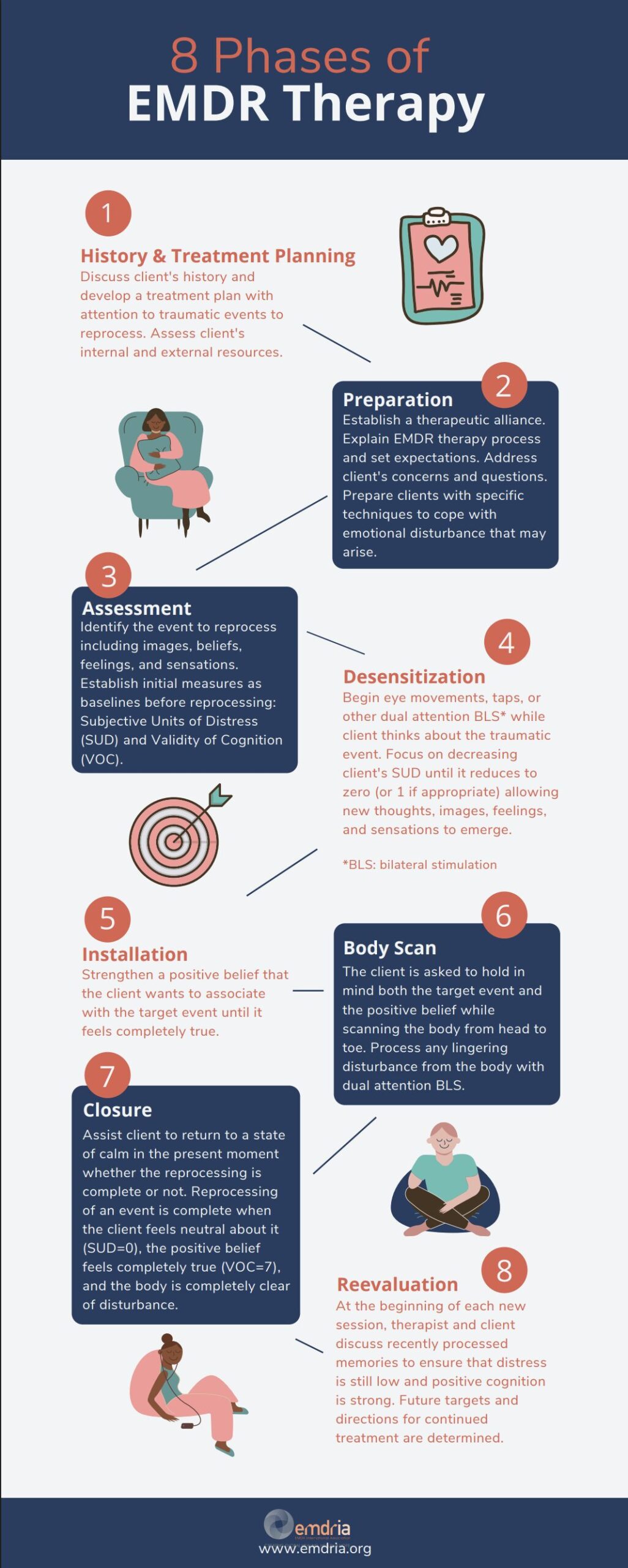
  1. After the therapist and client agree that EMDR therapy is a good fit, the client will work through the eight phases of EMDR therapy with their therapist.
  2. Attention will be given to a negative image, belief, emotion, and body sensation related to this event, and then to a positive belief that would indicate the issue was resolved.
  3. A typical EMDR therapy session lasts from 60-90 minutes. EMDR therapy may be used within a standard talking therapy, as an adjunctive therapy with a separate therapist, or as a treatment all by itself.

Frequently Asked Questions (FAQs) About EDMR

What is the Adaptive Information Processing (AIP)?

The Adaptive Information Processing (AIP) model is a theory that describes how the brain processes and links memories. It explains symptoms, guides Eye Movement Desensitization and Reprocessing (EMDR) therapy treatment, and predicts therapy outcomes.

The AIP model helps us understand EMDR therapy. It recognizes that both positive and negative experiences influence a person’s current perceptions, feelings, thoughts, and behaviors: “The past is present.” Experiences from the past become the “glasses” that we wear when we see the present. Disturbing experiences appeared "stuck" and linked to other disturbing ones. EMDR therapy helps us to get unstuck so those old feelings, thoughts, and body sensations do not keep affecting our lives today.

How is EMDR therapy different from other therapies?

EMDR therapy does not require talking in detail about the distressing issue or
completing homework between sessions. EMDR therapy, rather than focusing on changing the emotions, thoughts, or behaviors resulting from the distressing issue, allows the brain to resume its natural healing process.

EMDR therapy is designed to resolve unprocessed traumatic memories in the brain. For
many clients, EMDR therapy can be completed in fewer sessions than other
psychotherapies.

How does EMDR therapy affect the brain?

Our brains have a natural way to recover from traumatic memories and events. This process involves communication between the amygdala (the alarm signal for stressful events), the hippocampus (which assists with learning, including memories about safety and danger), and the prefrontal cortex (which analyzes and controls behavior and emotion). While many times traumatic experiences can be managed and resolved spontaneously, they may not be processed without help.

Stress responses are part of our natural fight, flight, or freeze instincts. When distress from a disturbing event remains, the upsetting images, thoughts, and emotions may create an overwhelming feeling of being back in that moment, or of being “frozen in time.” EMDR therapy helps the brain process these memories, and allows normal healing to resume. The experience is still remembered, but the fight, flight, or freeze response from the original event is resolved.

How do I sign up?

E-mail khtherapyca@gmail.com or call 760-410-8609 to discuss eligibility and next steps.

How does EMDR get to the root issues?

EMDR helps get to the root of the problem by taking into consideration early attachment experiences and patterns that shape how clients relate to themselves. The power of EMDR often brings vulnerability to the surface. Vulnerability can trigger defenses or the “Answers” of how we coped with things. Both attachment patterns and trauma responses often become blocks to healing.

Book your first session

Kind Heart Therapy